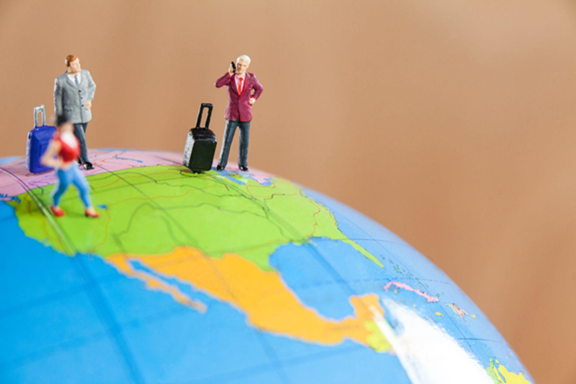
Long-distance travel reveals patterns about people, places, and decision-making, along with the perspectives associated with them. Marcy Gendel, Esq., highlights how these insights rarely surface through casual tourism. When travel extends beyond sightseeing and into sustained exposure, it begins to function as a lens for understanding systems, values, and human behavior. Broader discussions around analytical travel often reference this approach as an example of how a professional mindset influences the way destinations are observed, interpreted, and internalized.
Rather than serving as an escape from routine, global travel can become an extension of intellectual curiosity. For individuals accustomed to evaluating structure, context, and consequence, movement across borders often sharpens awareness rather than diluting it. Each country presents its framework shaped by law, economics, tradition, and social norms, all of which interact in subtle but instructive ways.
Travel is a study of systems, not just places.
Tourism typically highlights landmarks, cuisine, and surface-level culture. Analytical travel, by contrast, focuses on how societies organize themselves and how individuals operate within those structures. Transportation networks, legal norms, public behavior, and institutional trust all become part of the observation.
In many regions, the efficiency or rigidity of systems reflects deeper cultural priorities. Some cultures put more value on individual freedom than on collective responsibility. These distinctions are visible in everyday experiences such as public transit etiquette, regulatory enforcement, and conflict resolution. Over time, repeated exposure to these differences builds a more complex understanding of how environments influence decision-making.
This type of observation encourages travelers to move beyond assumptions rooted in their home culture. It reinforces the idea that no single framework is universal and that effectiveness often depends on alignment with social context rather than absolute standards.
Cultural Context and Behavioral Insight
Extended travel highlights how deeply culture shapes behavior. Communication styles, approaches to authority, and concepts of time vary significantly across regions. In some cultures, indirect communication preserves harmony, while in others, directness signals honesty and efficiency.
Understanding these patterns requires patience and attentiveness. Misinterpretations often occur when behavior is judged through an external lens rather than within its native context. Over time, analytical travelers learn to pause before evaluating actions, recognizing that meaning is often embedded in tradition and shared experience.
This awareness becomes especially valuable in professional environments where cross-cultural interaction is common. Exposure to different norms builds adaptability and reduces friction, allowing individuals to navigate unfamiliar settings with greater sensitivity and effectiveness.
Law, Order, and Social Trust Across Borders
One of the most revealing aspects of global travel is how societies establish and maintain order. Legal systems vary widely, not only in structure but in public perception. Some regions enforce formal regulations tightly and make them highly visible. In others, informal norms guide behavior more effectively than written rules.
Public trust plays a central role in how systems function. Perceived fairness and consistency in institutions lead to voluntary compliance. Where trust is weaker, individuals may rely more heavily on personal networks or workarounds. Observing these dynamics in real-world settings shows how law intersects with culture and lived experience.
Travelers who pay attention to these patterns often gain a deeper appreciation for the complexity of governance and the challenges of implementing policy across diverse populations.
History as a Living Influence
Unlike textbooks, travel reveals history as a living force. Architecture, city planning, and social customs often reflect past events that continue to shape present behavior. Borders, conflicts, and economic transitions leave visible marks on how communities function and interact.
In older cities, layers of history coexist within modern infrastructure. Religious institutions stand alongside commercial centers, and ancient trade routes influence contemporary development. Recognizing these continuities helps travelers understand why certain regions operate the way they do and why change often unfolds gradually rather than abruptly.
This historical awareness encourages humility. It underscores that current conditions are rarely accidental and that progress is often constrained or guided by long-standing narratives.
Decision-Making in Unfamiliar Environments
Travel places individuals in situations where habitual decision-making no longer applies. Language barriers, unfamiliar regulations, and different social cues require constant adjustment. This environment strengthens situational awareness and reinforces the value of flexibility.
Rather than relying on assumptions, travelers must observe, ask questions, and adapt. Over time, this process builds confidence in navigating uncertainty. It also sharpens judgment, as decisions are informed by context rather than routine.
These skills translate beyond travel. The ability to remain composed, curious, and responsive in unfamiliar settings supports better decision-making in complex professional and personal situations.
The Role of Reflection in Meaningful Travel
Without reflection, even extensive travel can remain superficial. Meaningful insight emerges when experiences are processed rather than simply accumulated. Reflection allows travelers to connect observations to broader themes such as governance, ethics, and human behavior.
Journaling, quiet observation, and intentional pauses create space for integration. Instead of moving rapidly from one destination to another, reflective travel prioritizes depth over volume. This approach transforms travel from a series of experiences into a cohesive learning process.
Over time, reflection helps travelers recognize patterns across cultures while also appreciating the uniqueness of each environment.
Broadening Perspective Without Losing Grounding
One of the challenges of global exposure is maintaining grounding while absorbing diverse viewpoints. Travel expands perspective, but it does not require abandoning core values. Instead, it invites comparison, evaluation, and refinement.
Encountering alternative systems encourages individuals to question assumptions and clarify priorities. Some practices may inspire adoption, while others reinforce appreciation for familiar structures. This balanced engagement supports intellectual growth without creating disorientation.
Perspective gained through travel is most valuable when it informs thoughtful action rather than passive observation.
Travel as an Ongoing Educational Process
Global travel does not offer definitive conclusions. Instead, it raises better questions. Each destination contributes to an evolving understanding of how societies function and how individuals navigate complexity.
When approached intentionally, travel becomes an ongoing educational process rather than a temporary diversion. It strengthens analytical thinking, cultural literacy, and emotional intelligence. These outcomes extend well beyond the journey itself, influencing how individuals interpret information, engage with others, and approach decision-making.
Closing Reflection
Travel has the potential to be far more than movement across geography. When viewed through an analytical lens, it becomes a method for understanding systems, history, and human behavior in context. Travelers gain insight that distant study cannot replicate by observing how societies organize themselves and respond to challenges.
A thoughtful approach to global exploration transforms destinations into lessons and experiences into perspective. Over time, this depth of engagement fosters a more informed, adaptable, and grounded worldview, one shaped not by tourism alone, but by intentional observation and reflection.
